Timeline: 15 weeks, April-July 2025
Impact: 80% sorting accuracy, 30+ retail and distribution partners, 120k+ pounds of plastic diverted from landfills
Plastic Beach Branding, Placard, and Site Overhaul
In Short
Redesigned the Plastic Beach website and informational placard, bringing clarity to soft plastic recycling and streamlining user flow.
My Role
Project lead/client communications, Designer
Team: 5 Designers, 1 Software Engineer
Tools: Figma, Wix
Plastic Beach is a nonprofit dedicated to reducing soft plastic waste. They offer recycling programs for businesses, grocers, and residents, as well as public education and advocacy.
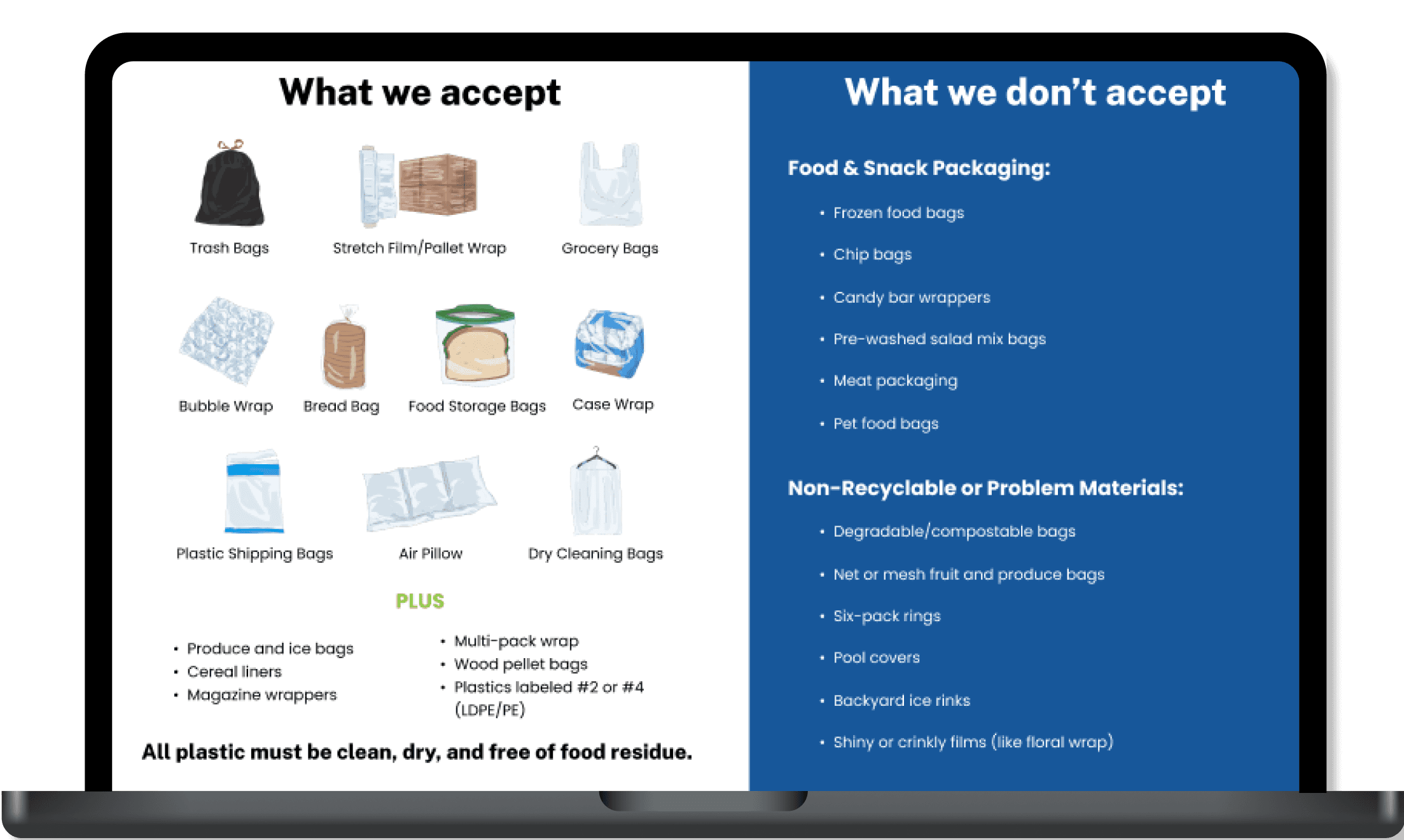
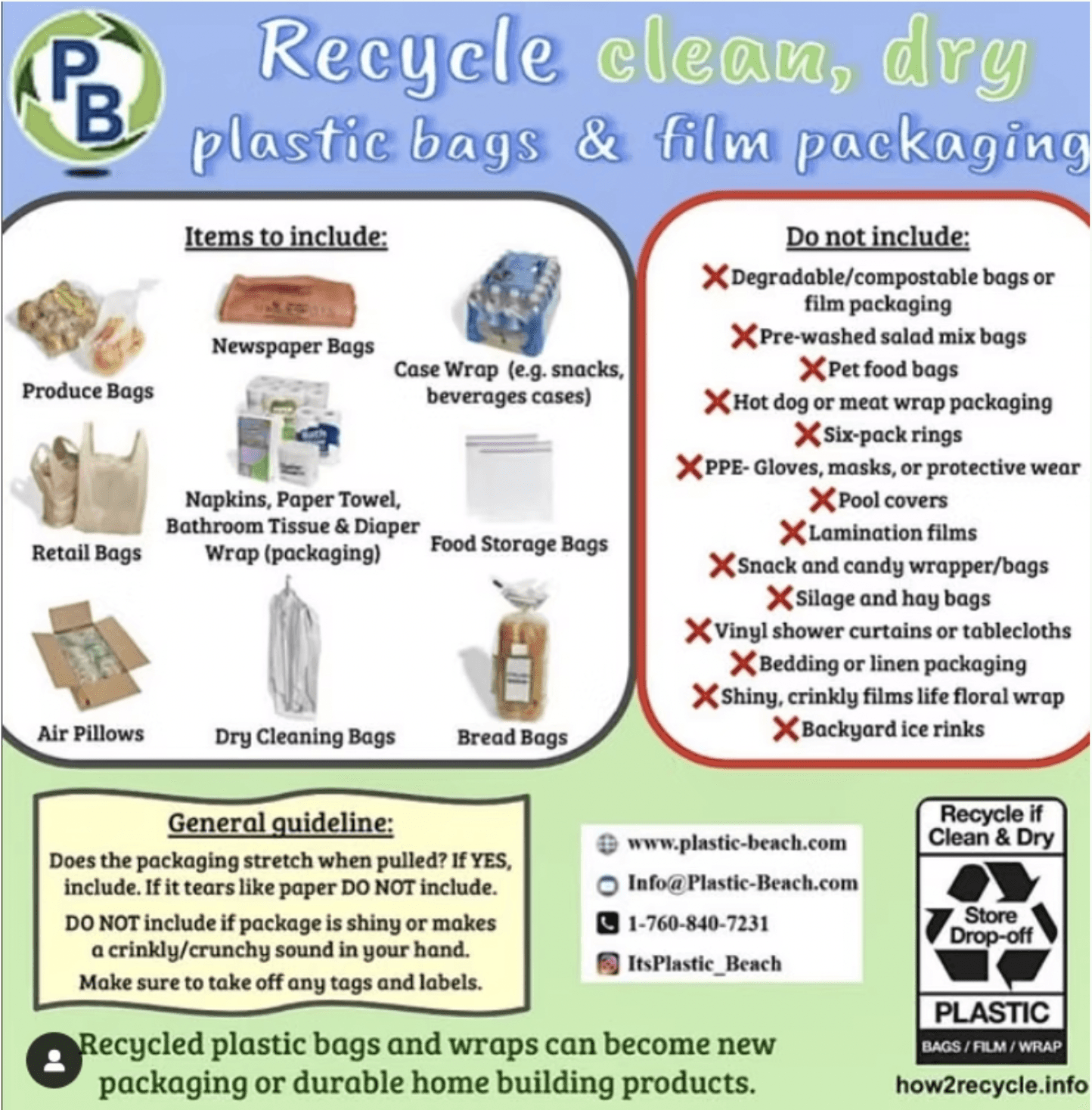
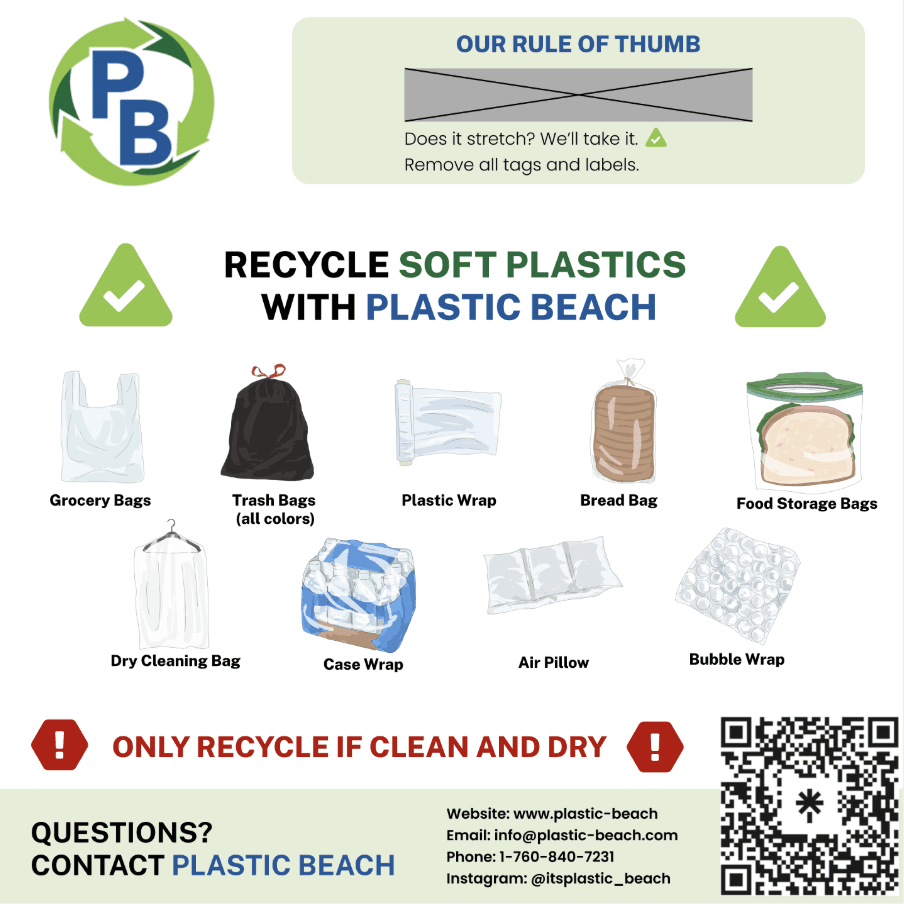
Old Placard
Context
The Problem
The Task
Plastic Beach's partners struggled to sort soft plastic correctly.
Lacked a visual brand: inconsistent messaging and brand assets
Confusing website structure —> missed opportunities for donations and sponsors
Founder Matthew Clough brought us on to redesign the placard to the right and to develop a consistent design system to be used across all brand assets.
Discover
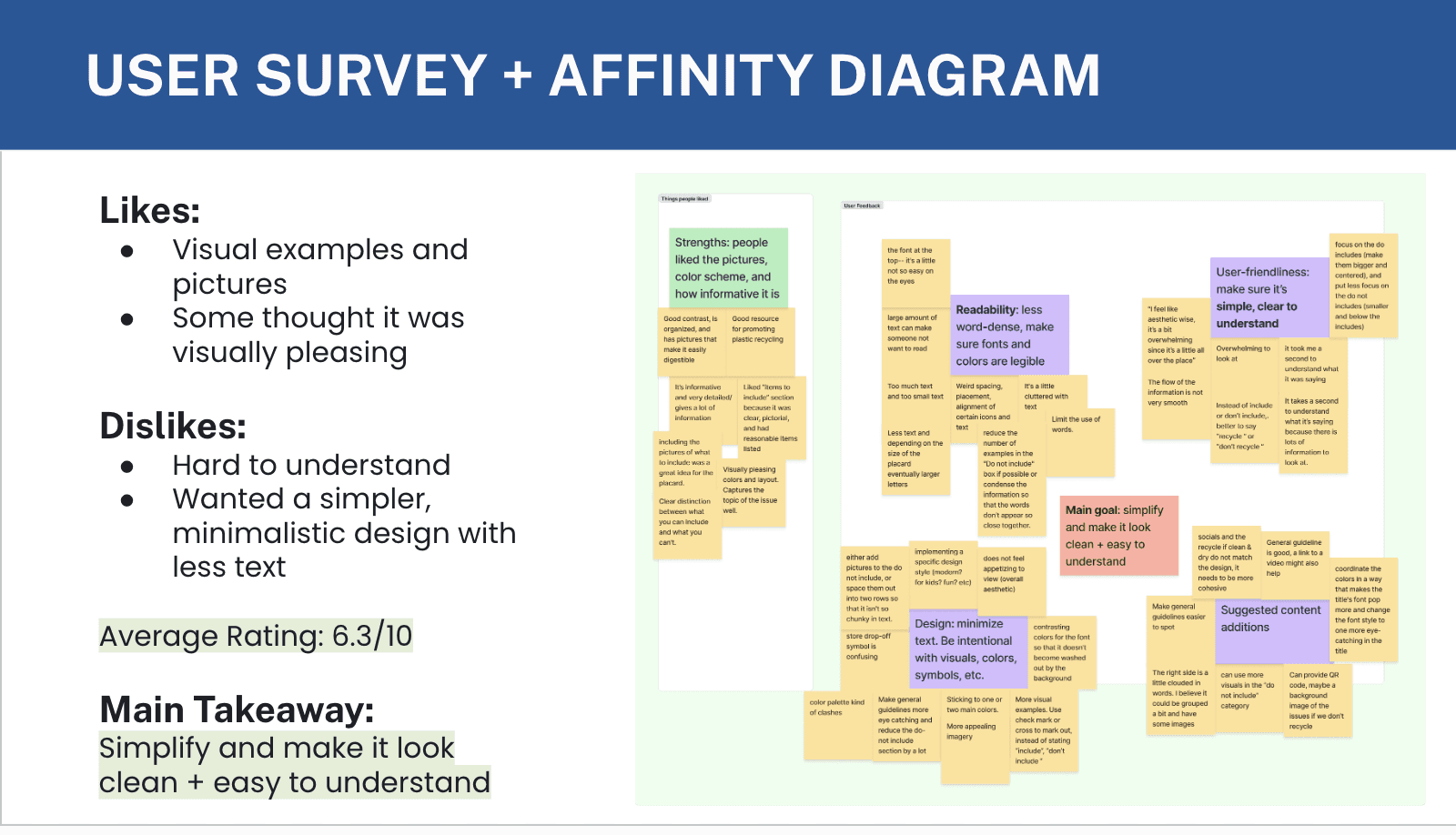
User Survey
Client-side Interviews
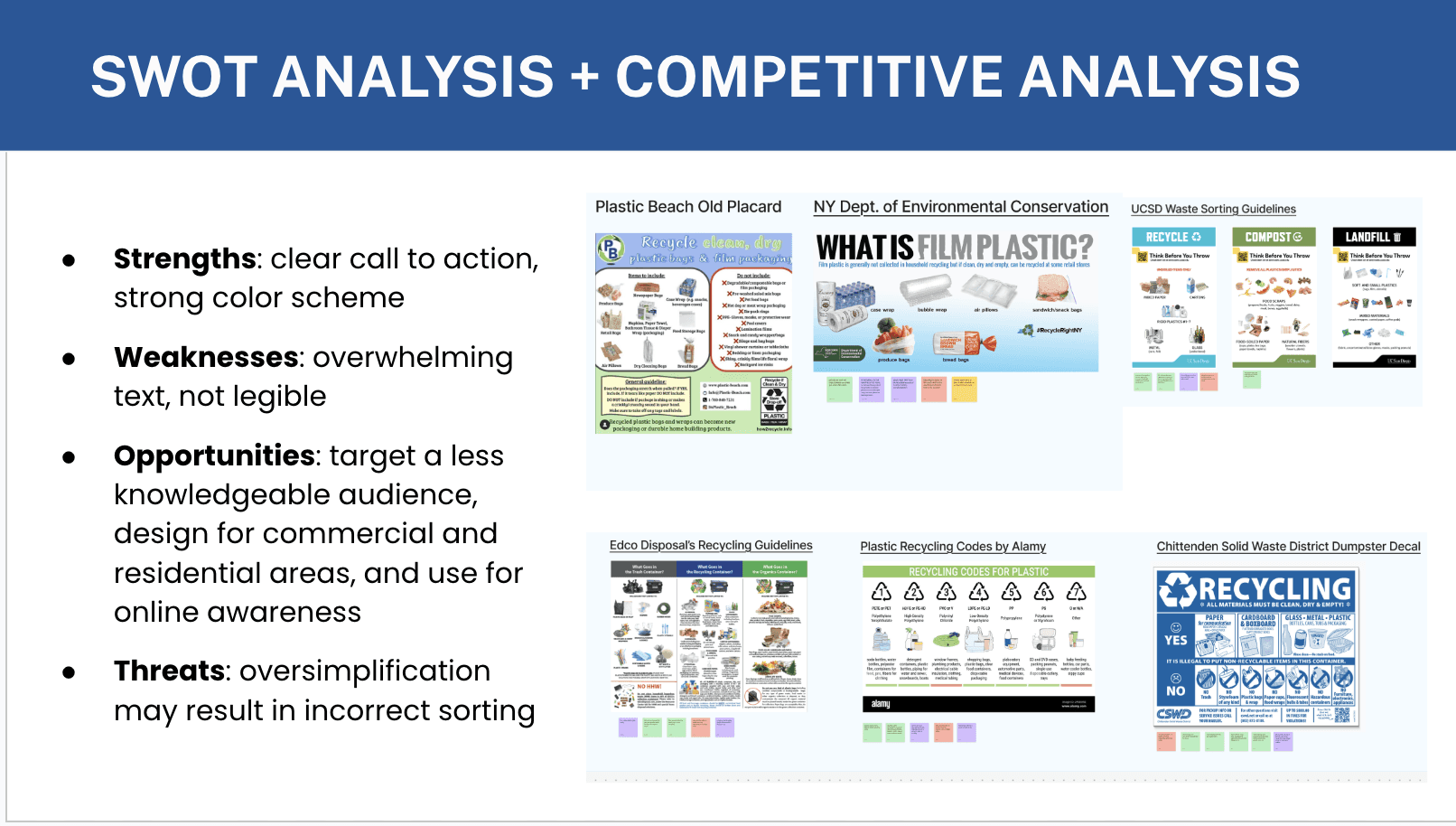
SWOT analysis
Competitive Analysis
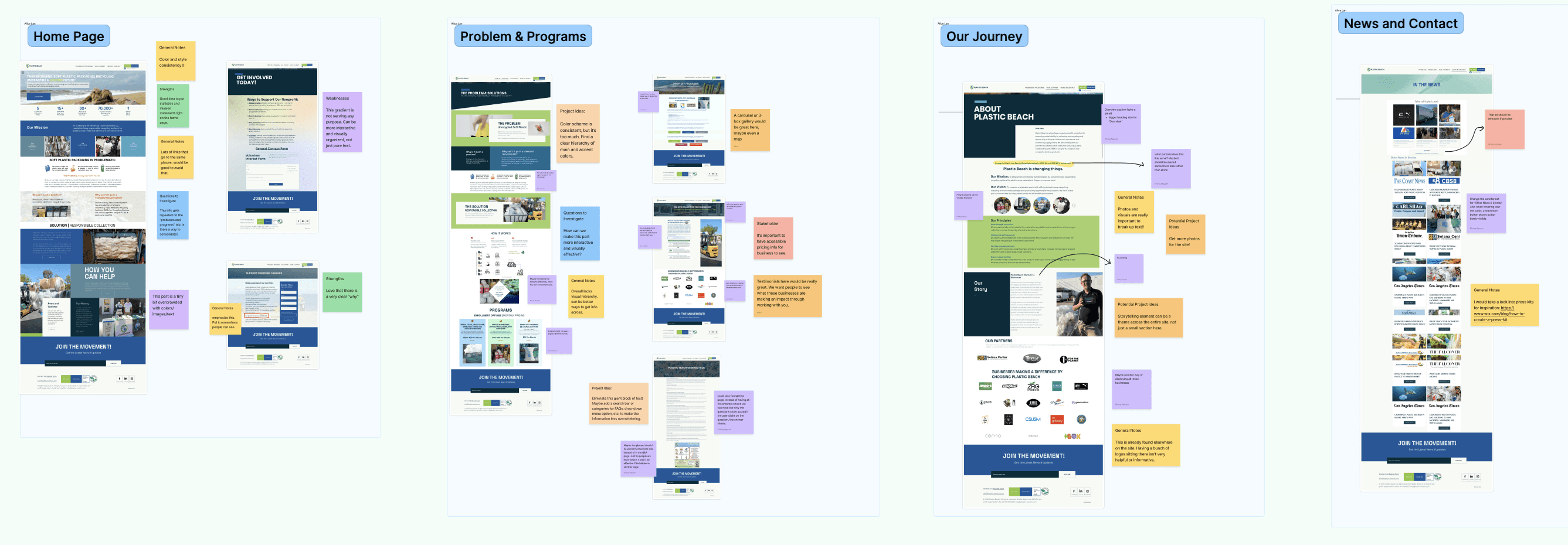
Website Audit
Define
User Personas
Problem Statement
Deliverables
Expectations
Design
Style Guide
Wireframes
Prototypes
Site Flow Map
Newsletter
Test
A/B Testing
Task Observation
Online Survey
Deliver
Recycling Placard
Wix Website
Style Handbook
Design Hand-off
Design Process
This project involved two main stages: a placard redesign and a website overhaul. We made designs choices based on stakeholder and user feedback, research insights, and long-term impact.
83% of survey respondents found the original placard difficult to read
100% of interviewed business partners wanted the placard to be simpler
Inconsistent style, colors, spacing, and fonts
Difficult to find programs, pricing, and ways to help, leading to poor engagement
Surveys: Identifying Pain Points
Website Audit: Understanding our Client's Brand
SWOT ANALYSIS AND TRADE-OFF IDENTIFICATION: oversimplifying the placard can lead to confusion, but too much information is visually overwhelming.
DISCOVER
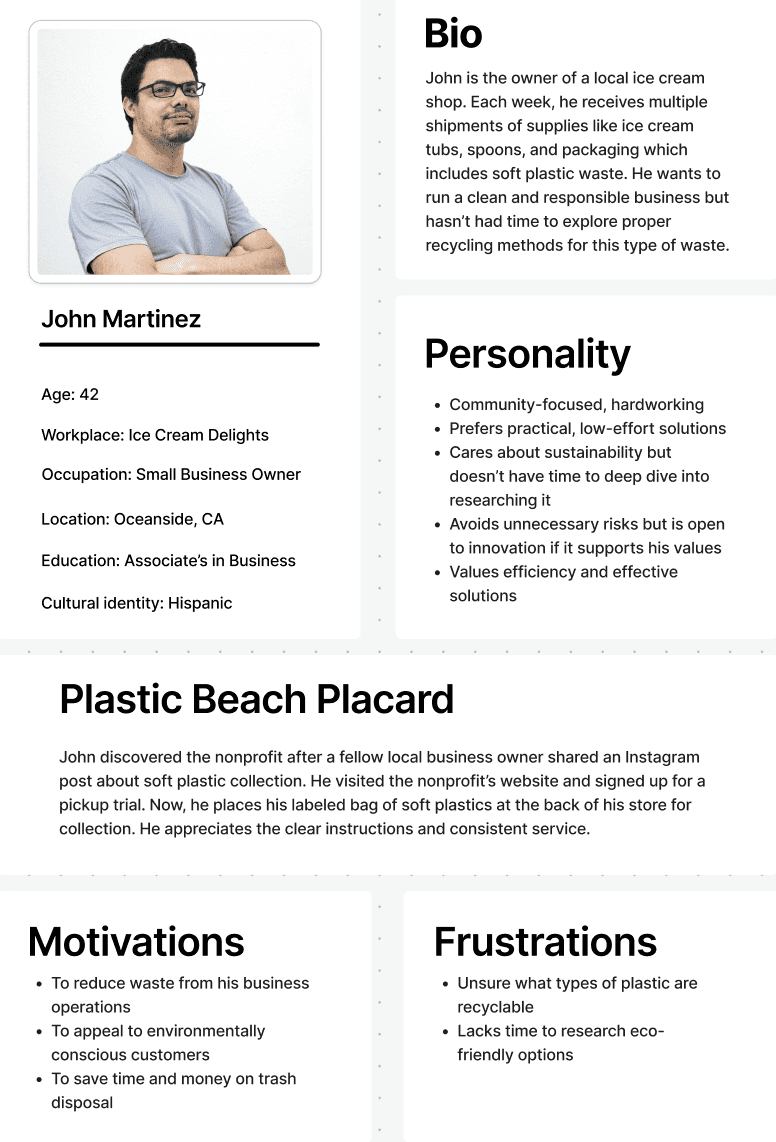
Solutions for John Martinez:
Clear sorting flow reduces confusion and training time
Photo examples and icons enable quick recognition of recyclables
One-glance guide eliminates need for extra instructions
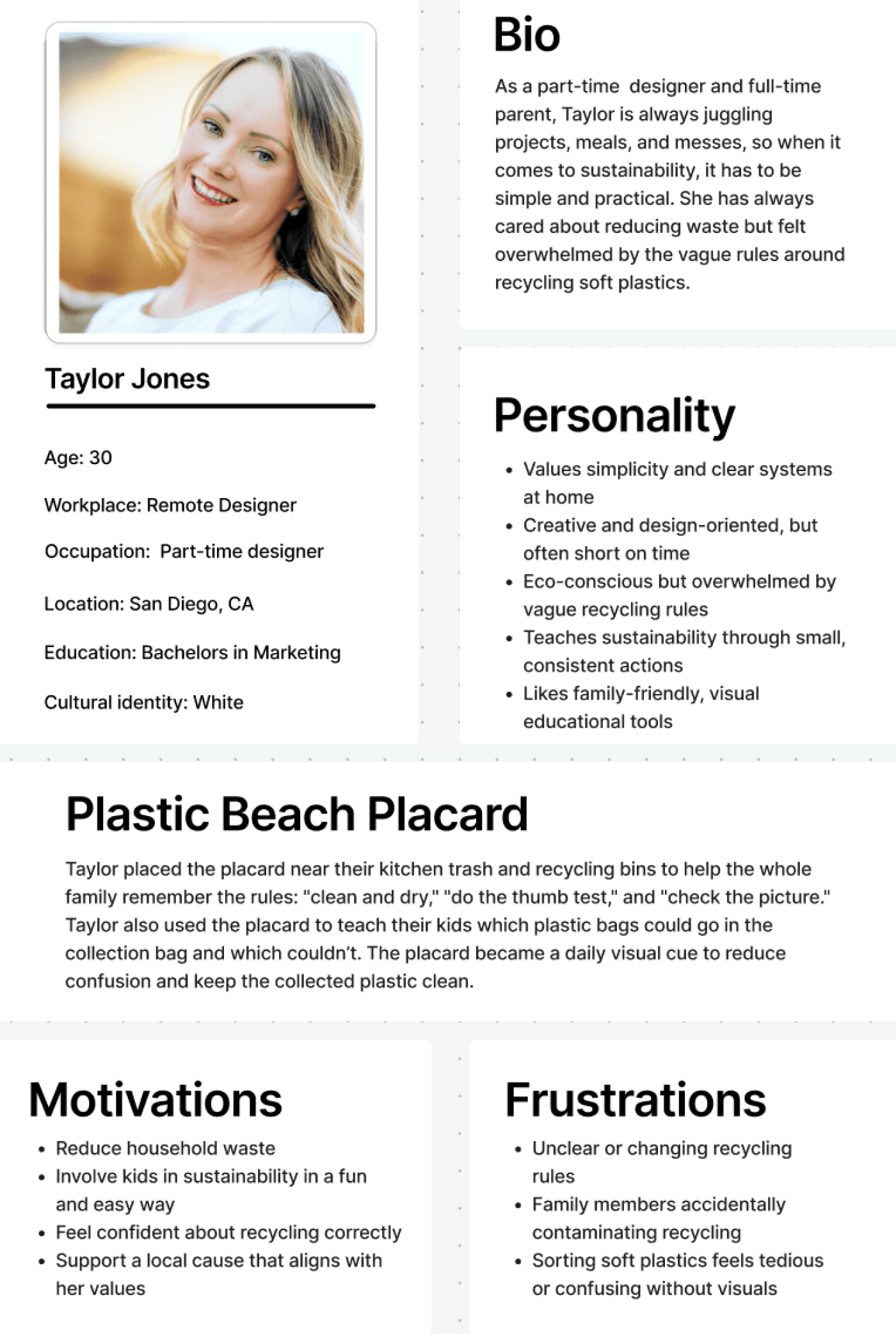
Solutions for Taylor Jones:
Create a teaching tool that can build long-term recycling habits with intuitive iconography, color-coding, and concise instructional language
Placard directs users to website for in depth recycling information
DEFINE
Personas
Through our research, we identified two key user personas: business partners like John Martinez and residents like Taylor Jones. Each had distinct needs and behaviors that directly informed our design decisions.
Streamline waste sorting for partners
Educate about soft plastic recycling
Promote Plastic Beach’s mission and services
How Might We...
Implement a simple and clean design system to create a placard that builds knowledge about soft plastics and improves sorting efficiency for clients?
Stakeholder Expectations
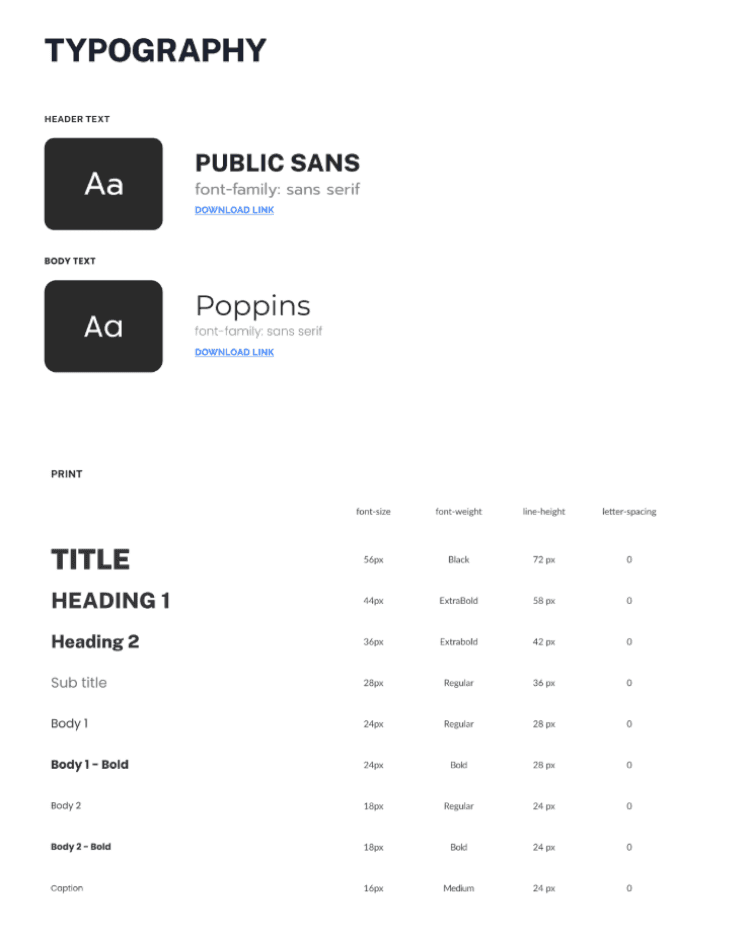
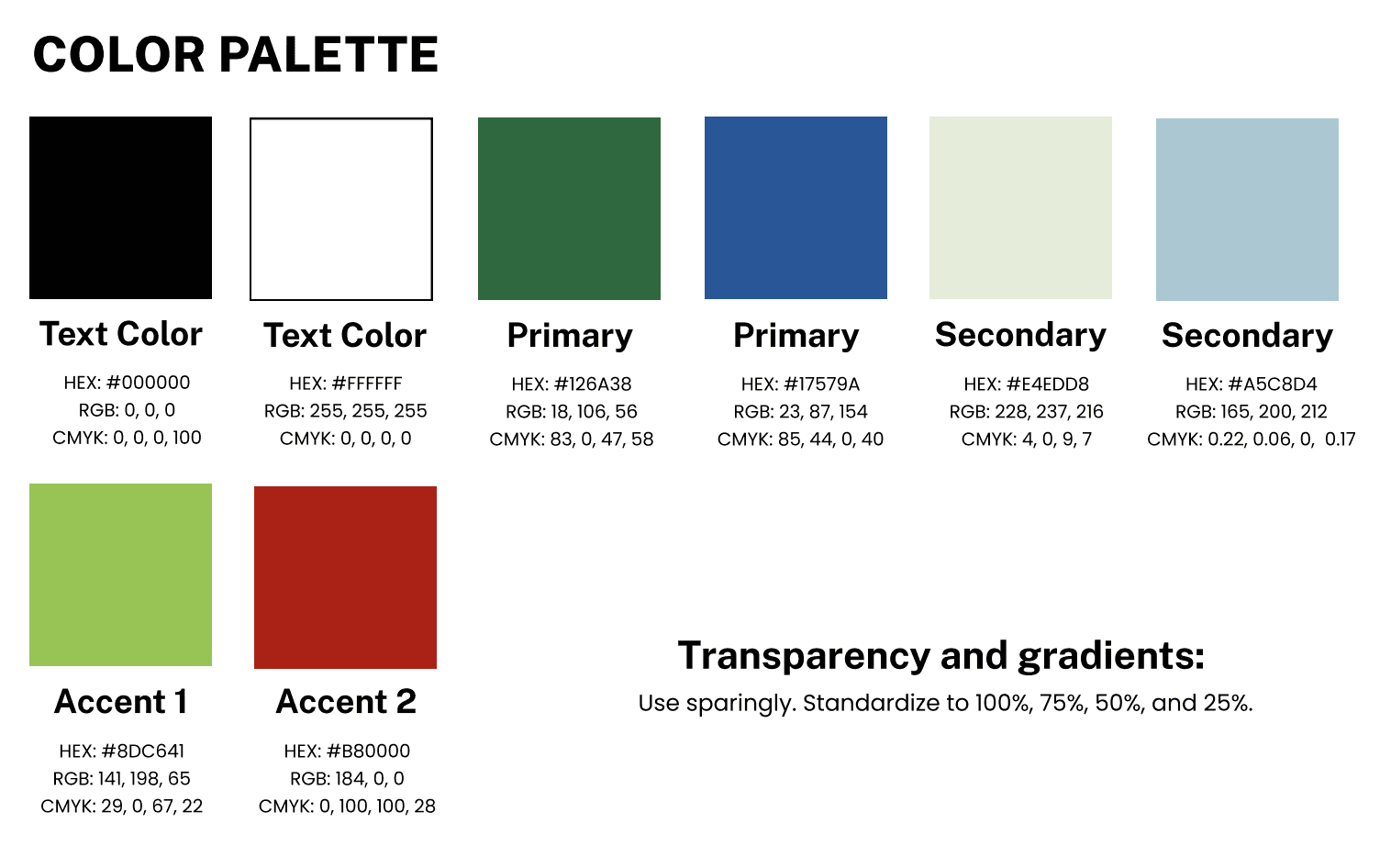
Create a unified style guide for font, color, and icon consistency across platforms
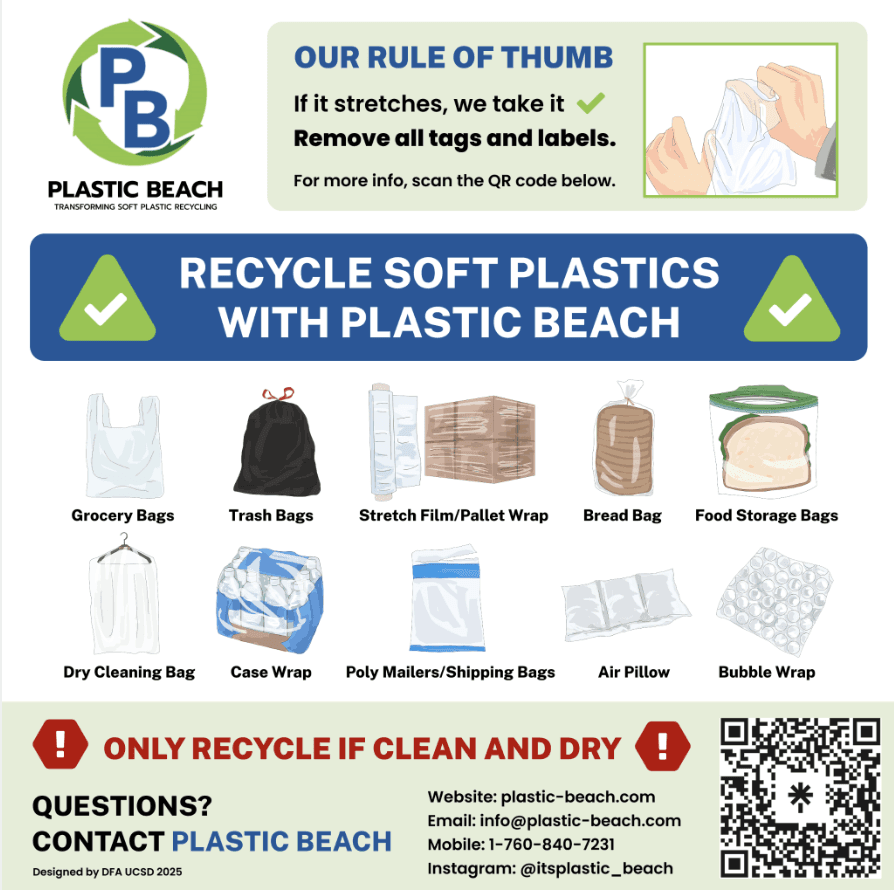
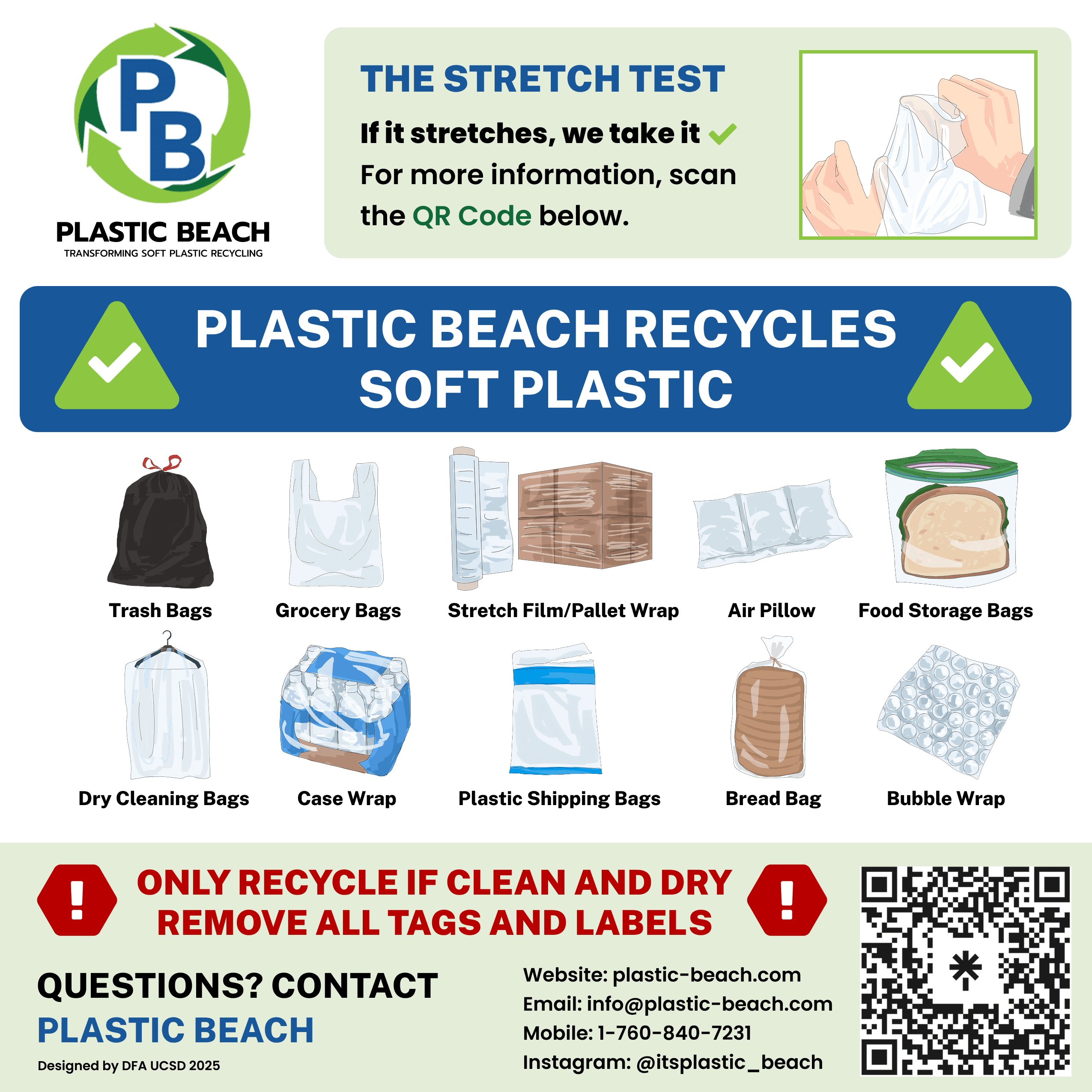
Simplify the placard. Emphasize visuals and memorable sorting rules
Add a Recycling Guidelines page to the website for in-depth information
Improve the website’s user flow and style for better engagement
DESIGN
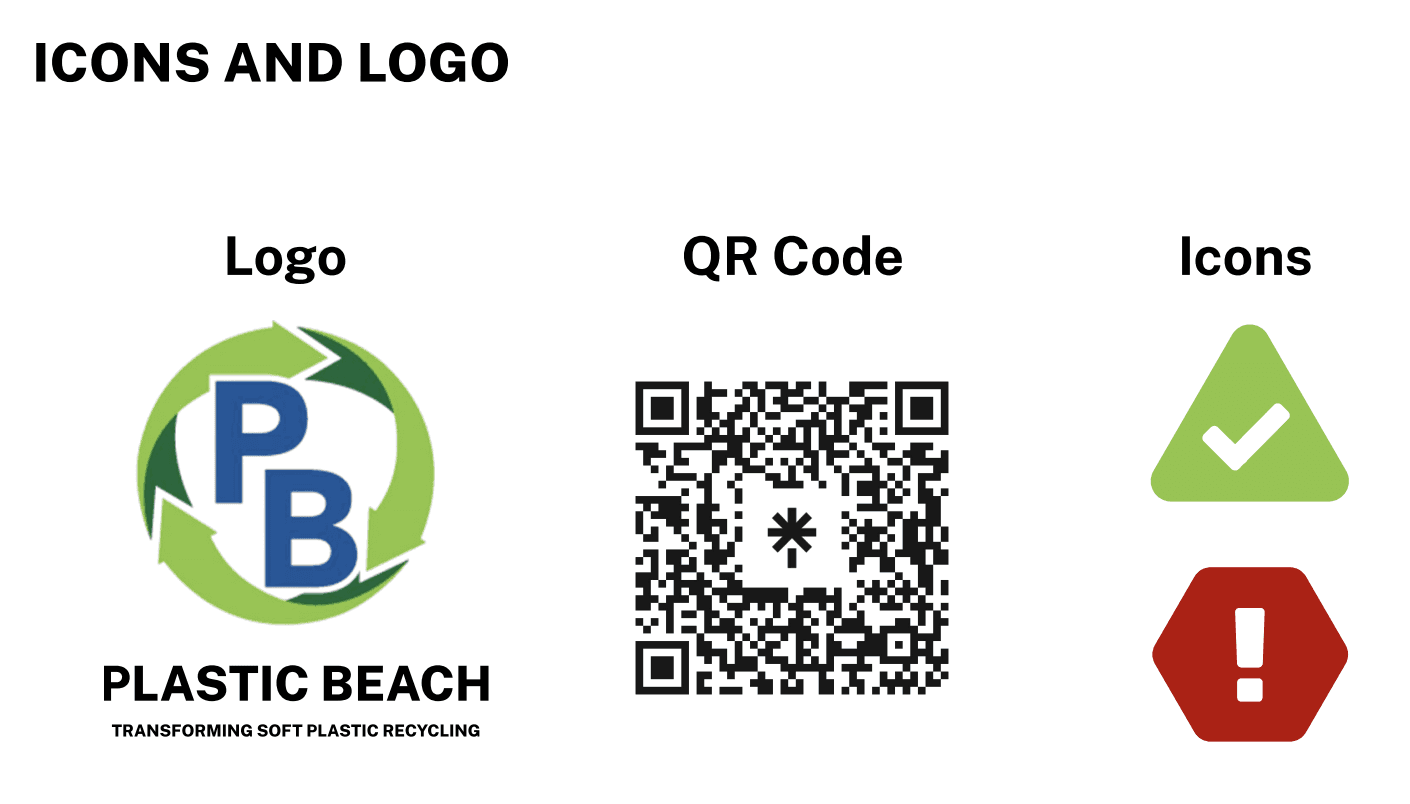
Style Guide: Inspired by the Logo and Old Website
Lo-Fi Wireframe
Client wanted Big logo
Content hierarchy
Emphasis on visuals
Mid Fidelity
High Fidelity
Emphasized clean style and visual consistency
Slogans, cues, and CTAs
Added content details
Iterated for visual hierarchy based on client feedback
Placard Design
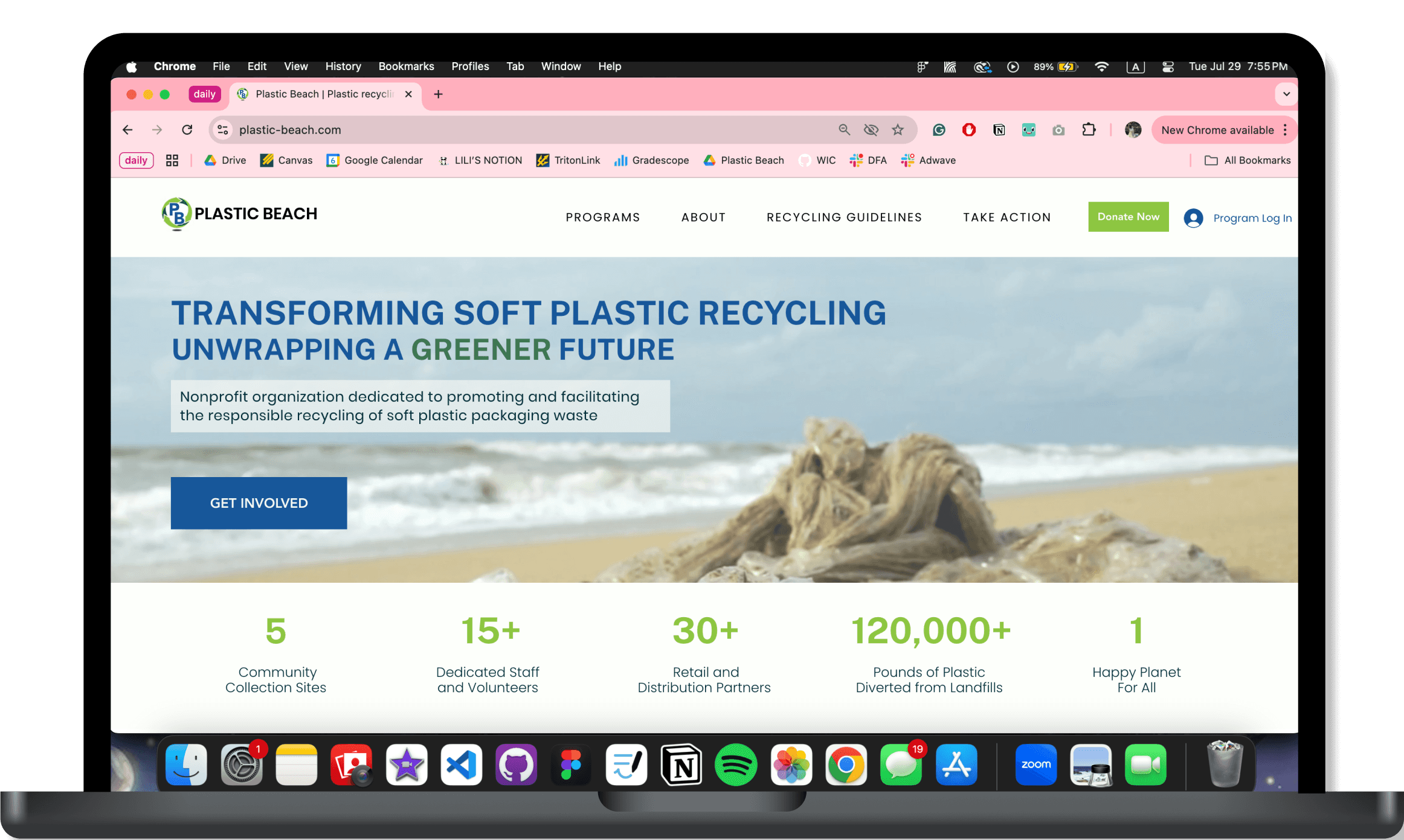
Web Page Design
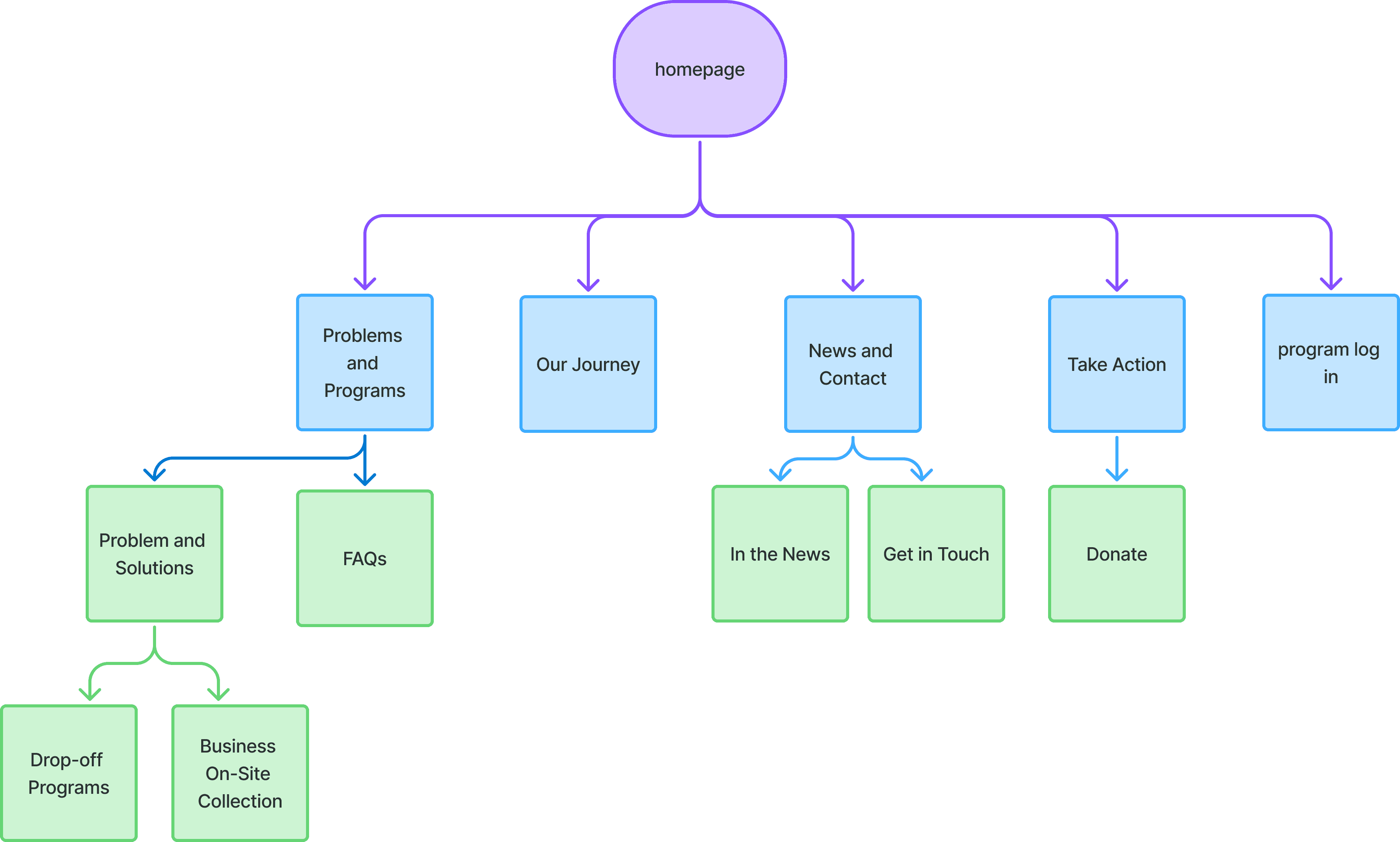
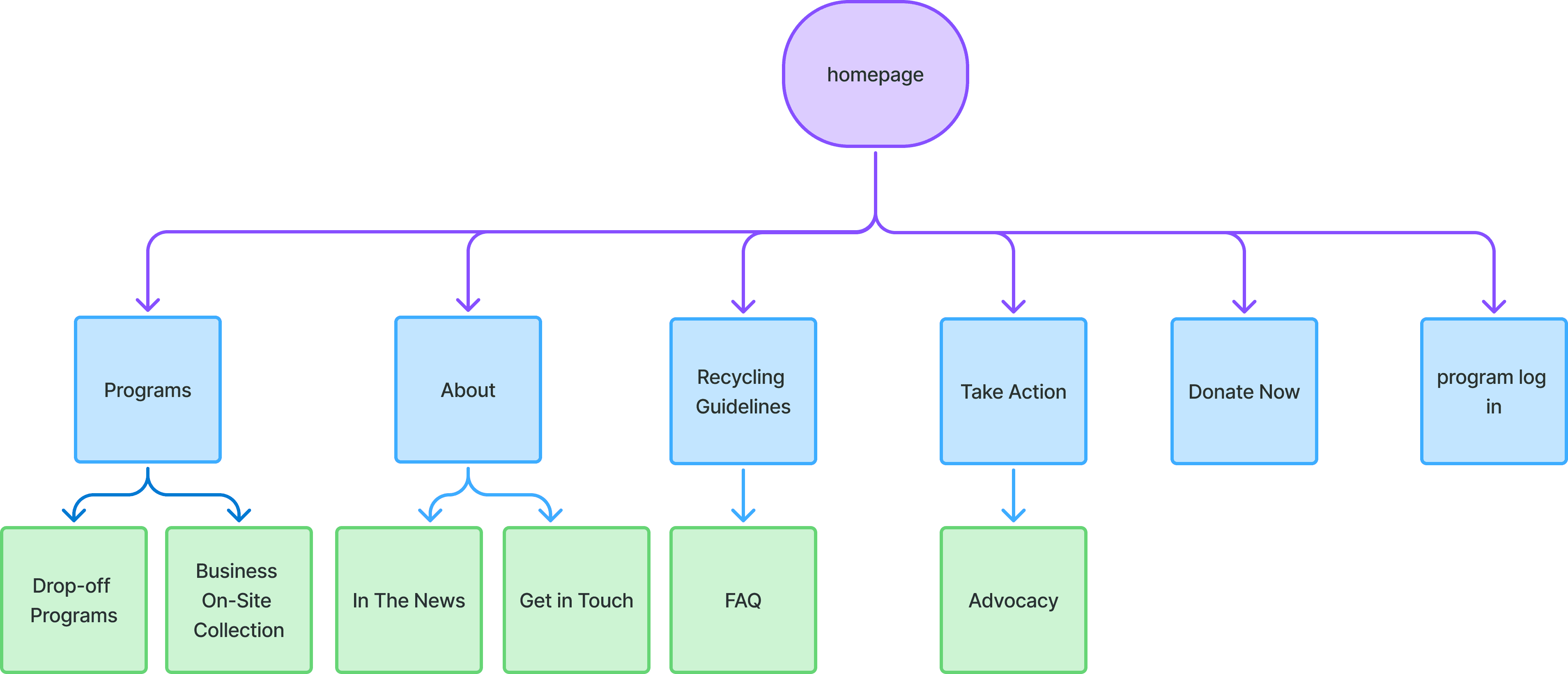
Navigation and Site Flow
The original website was difficult to navigate and had too many hidden tabs, making it difficult for users to find the right information.
We rearranged the nav bar order, tab titles, and content to reduce hidden menus and make the important information easy to find.
TESTING & ITERATION
A/B Testing and Task Observation
We ran a user test with two groups (5 participants each) completing the same sorting task using printed placards. Group A used our redesigned version; Group B used the original. Participants sorted a Ziploc bag (accepted), chip bag (not accepted), and plastic bottle (not accepted). We observed behavior, then gathered feedback on clarity and ease of use.
Key Findings and Feedback:
Group A had an 80% success rate; Group B was 67%.
All errors in Group A were from the plastic bottle task. Ziploc and chip bags were 100% correctly sorted.
Users still confused soft vs. regular plastic recycling.
New placard was rated as more clear, memorable, and user-friendly.
Recommended print size: 10×10 inches for visibility.
Key Findings and Feedback:
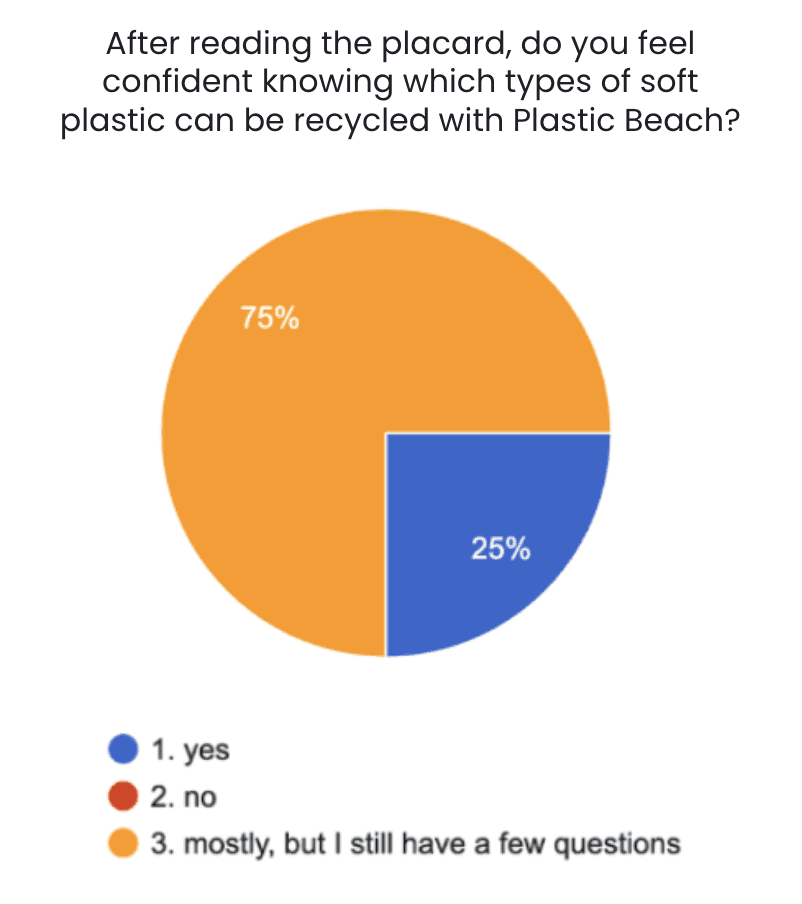
100% of respondents found the placard clear and helpful in sorting soft plastic
75% still had a few questions unanswered about recycling with Plastic Beach
They wanted to add specific types of plastic and common sorting mistakes
Business Partner Survey
Due to being an online project, we were unable to user test with actual business clients, who would be the main user base for this placard. To address this challenge, we sent out an online survey for them to complete with a digital version of the new placard attached.
Iteration and Communication
After presenting our findings to our client and communicating on whether to add clarifying information to the placard, we decided to keep the placard content the same and direct people with further questions to the Recycling Guidelines website page instead. We did not user test for the website because our client needed fast Wix implementation, and the majority of content was either kept the same or changed based on previous user feedback.
Changes Made
Adjusted placard font size to be larger and rearranged the order of images to be more balanced
Updated the home page, About, and Take Action pages to be more visually cohesive
I also created a Wix Newsletter template using our style guide for news, shout-outs, and updates
100% positive client and stakeholder feedback
Style guide adopted across all client materials
200k+ lbs of plastic successfully diverted from landfills!
Outcomes
Concluding Thoughts
As a team, we learned how to translate complex, niche knowledge into simple, user-friendly visuals and balancing client goals with user needs. I personally gained experience communicating with stakeholders and leading meetings, and this was my first time iterating based on user and client feedback. Most importantly, this project taught me to advocate for the user within business constraints. Our initial project scope was to create a simple placard, but I saw opportunities to improve user experience on the website and took the initiative to bring our client on board. They are very happy with the new website design, and overall I’m incredibly proud of our work!
Looking Forward
Conduct usability testing for future website updates
Our team plans to visit the Plastic Beach warehouse together in the Fall!
© 2026 designed by Alice Lan
